
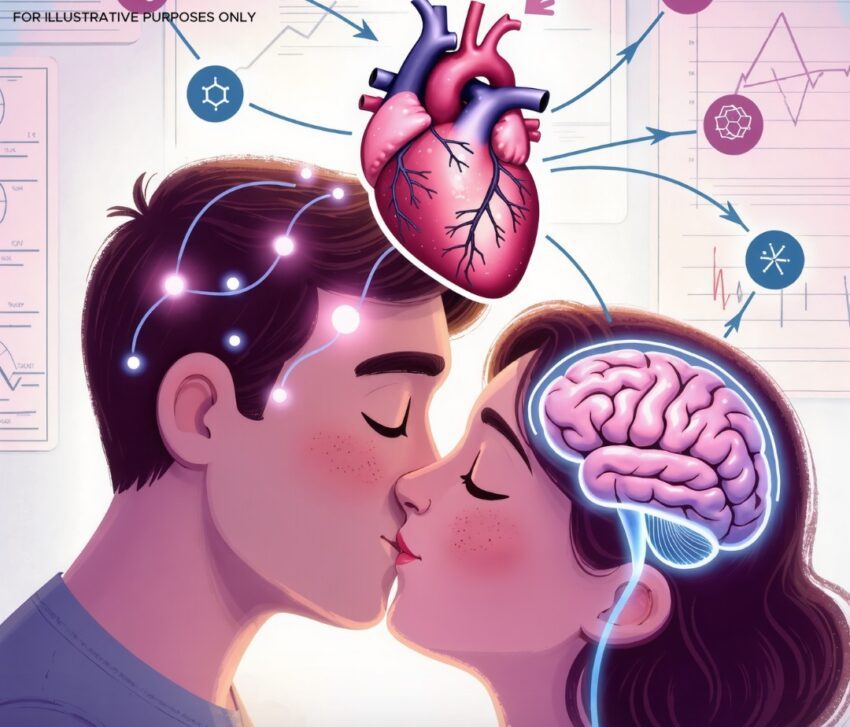
A kiss can feel simple and spontaneous, yet the reaction it triggers in your body is anything but ordinary. Many people notice that their heart suddenly begins to race when they kiss someone they care about. While it might seem like pure emotion, science shows that this response is actually the result of a complex interaction between your brain, hormones, and nervous system.Science
Understanding why your heart beats faster during a kiss reveals just how powerful human connection can be — and how deeply biology is involved in moments of intimacy.
Your Brain Interprets a Kiss as an Exciting Event
When two people kiss, the brain quickly recognizes the moment as emotionally significant. The lips are one of the most sensitive parts of the body, containing a high concentration of nerve endings. These nerves send signals directly to the brain, particularly to areas responsible for pleasure, emotion, and reward.
The brain’s limbic system, which processes emotions and attraction, becomes highly active during a kiss. This activation stimulates the release of chemicals that create feelings of excitement and connection. As a result, your body enters a mild state similar to excitement or anticipation.
One of the immediate effects of this response is an increase in heart rate.
Adrenaline Triggers the “Excitement Response”
A key reason your heart beats faster during a kiss is the release of adrenaline, also known as epinephrine. Adrenaline is the hormone responsible for the body’s “fight or flight” response, but it also appears during moments of excitement, attraction, and heightened emotion.
When adrenaline enters the bloodstream, several things happen:
Your heart rate increases
Blood flow improves
Breathing becomes slightly faster
Your senses become more alert
This reaction prepares the body for action, but in the case of a kiss, it simply heightens awareness and intensifies the emotional experience. That quickened heartbeat is essentially your body responding to excitement and attraction.
Dopamine Creates Feelings of Pleasure
Another powerful chemical released during a kiss is dopamine, often referred to as the brain’s “feel-good” neurotransmitter. Dopamine plays a central role in motivation, pleasure, and reward.
When dopamine levels rise, the brain experiences a sense of happiness and satisfaction. This is why kissing someone you are attracted to can feel thrilling or even slightly addictive. The heart rate may increase as the brain associates the moment with pleasure and anticipation.
Dopamine also reinforces bonding behaviors, which encourages people to repeat experiences that make them feel good — including kissing.
Oxytocin Strengthens Emotional Connection
Kissing can also trigger the release of oxytocin, commonly known as the “love hormone.” Oxytocin is associated with trust, bonding, and emotional closeness.
This hormone is especially important in romantic relationships because it strengthens the emotional connection between partners. The body may respond to this surge of oxytocin with feelings of warmth, calmness, and affection.
Although oxytocin can create relaxation, the emotional intensity of the moment can still keep the heart beating slightly faster than usual.
Increased Blood Flow Heightens Sensitivity
During a kiss, blood vessels dilate and blood flow increases in various parts of the body. This change is part of the body’s natural response to attraction and physical closeness.
Improved circulation means more oxygen is delivered to tissues, including the brain. This can make sensations feel more intense and pleasurable. Because the heart is responsible for pumping that blood, it naturally beats faster to keep up with the increased demand.
In other words, your heart speeds up because your body is working harder to support the emotional and physical experience.
The Power of Psychological Anticipation
Biology is only part of the story. Psychological factors also play a major role in why your heart races during a kiss.
When you anticipate a kiss, your brain often builds emotional excitement beforehand. Thoughts about attraction, affection, or nervousness can stimulate the nervous system even before physical contact occurs.
This anticipation activates the sympathetic nervous system, which controls responses related to excitement and alertness. As a result, your heart may start beating faster even before the kiss happens.
This blend of emotional expectation and physical sensation creates the powerful reaction many people experience.
A Natural Sign of Attraction
Discover more
DIY craft kits
Cucumber facial masks
College planning resources
A faster heartbeat during a kiss is not something to worry about. In most cases, it simply indicates that your body is responding to attraction, excitement, and emotional connection.
Scientists consider kissing an important part of human bonding. Research suggests that it may help partners assess compatibility through scent, taste, and chemical signals exchanged during close contact.
The racing heart you feel is your body’s way of responding to this deeply social and biological interaction.