
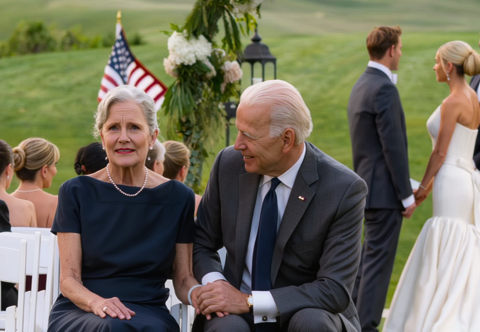
AT MY SON’S WEDDING, I WAS SEATED ALONE IN THE BACK. “WE NEED EVERYTHING TO LOOK A CERTAIN WAY,” HIS BRIDE SAID, STILL SMILING. SUDDENLY, A MAN IN AN EXPENSIVE SUIT SAT BESIDE ME: “ACT LIKE YOU’RE WITH ME.” WHEN MY SON SAW US TOGETHER, HE WENT STILL.
I Was Placed in the Last Row at My Son’s Wedding, Like I Was Meant to Blend Into the Flowers. The estate outside Denver looked like a magazine spread—white chairs, polished stone, soft music, and guests dressed for cameras. I wore my best navy dress and told myself showing up was enough. Then a man in a charcoal suit took the empty seat beside me and covered my hand like we’d arrived together. The room’s attention shifted in one breath. And when my son finally looked back and saw who was sitting with me… everything changed.
My name is Eleanor Patterson. I’m 68, and I spent most of my life teaching English and raising one child with the kind of steady love that never asks for applause.
Three years ago, I said goodbye to my husband. After that, my calendar got quiet in a way I wasn’t ready for. So when my son’s wedding invitation arrived—cream paper, careful wording, a venue I had to look up twice—I circled the date and planned every detail like it mattered.
The Ashworth estate sat at the edge of the foothills, with trimmed hedges and a long gravel drive where valets moved like they were part of the décor. A string quartet played somewhere near the lawn, and the air smelled like roses and citrus.
I stepped out of my rideshare, smoothed the front of my dress, and walked toward the ceremony chairs with my shoulders back.
A coordinator met me at the aisle with a clipboard and a practiced smile.
“Mrs. Patterson, right this way.”
She guided me past the first rows—where bracelets caught the light and laughter floated easily—then farther, past the photographers, past the last cluster of family.
She stopped at the back section and pointed, as if it was the most natural thing in the world.
“Here.”
I looked down at the place card and then at the empty chairs around it. The back row had space. Too much space.
I lifted my chin anyway and sat.
At the altar, my son Brandon stood in a tux that fit him perfectly. He looked like the version of himself the world applauds—confident, polished, ready for a camera.
For a second, I saw him at eight years old, running into my classroom after school with a paper crown he’d made from notebook paper.
Then the music rose, and his bride appeared, moving down the aisle like the day had been rehearsed a hundred times.
Brandon didn’t look my way. Not once.
I folded my hands in my lap and focused on breathing steadily.
That’s when the seat beside me shifted.
A man sat down—unhurried, certain, dressed in a charcoal suit that looked tailored for him alone. Silver hair, calm eyes, the kind of presence that makes people sit a little straighter without knowing why.
He didn’t speak. He didn’t even turn his head much.
He simply placed his hand over mine—gentle, steady—and offered a small smile, like we’d shared a thousand conversations already.
I didn’t pull away.
I let my shoulders settle. I let my expression soften. I let myself look like I belonged exactly where I was.
A ripple moved through the guests behind us. Heads tilted. Attention drifted.
At the altar, Brandon’s gaze finally swept across the crowd.
It landed on the back row.
It landed on me.
And then it landed on the man beside me.
Brandon’s face changed so fast it was like someone had flipped a switch. His posture tightened. His color shifted. His eyes locked on us as if the room had suddenly lost its air.
His bride noticed immediately. Her smile paused. Her eyes followed his.
The man beside me gave the lightest squeeze of my hand, like a quiet signal to stay calm.
Brandon took one step away from the altar.
And started looking straight toward the back row.