
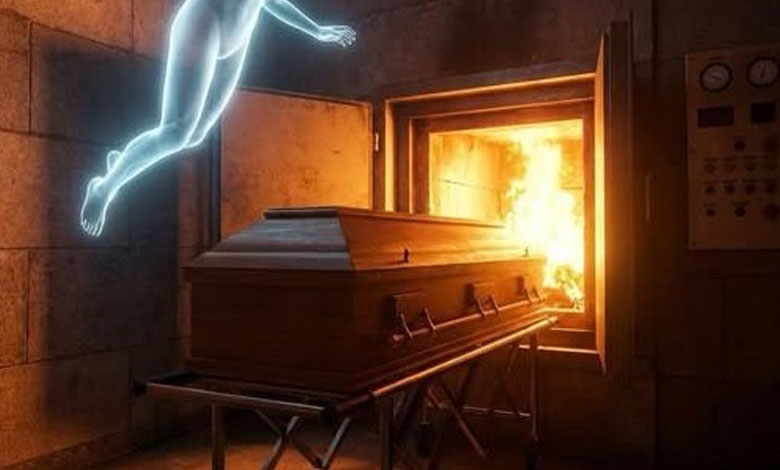
The intersection of faith and finality has always been a space of profound contemplation, inviting us to examine how we honor the end of an earthly journey while remaining steadfast in spiritual conviction. In recent years, cremation has become an increasingly common choice across the United States, yet for many people of faith—particularly those in their senior years—the decision is rarely purely practical. Instead, it is a deeply personal inquiry into whether such a practice aligns with the sacred narratives found in Scripture. These questions do not typically arise from a place of fear, but rather from a sincere desire…
The intersection of faith and finality has always been a space of profound contemplation, inviting us to examine how we honor the end of an earthly journey while remaining steadfast in spiritual conviction. In recent years, cremation has become an increasingly common choice across the United States, yet for many people of faith—particularly those in their senior years—the decision is rarely purely practical. Instead, it is a deeply personal inquiry into whether such a practice aligns with the sacred narratives found in Scripture. These questions do not typically arise from a place of fear, but rather from a sincere desire for reverence. For the believer, the way a body is treated at the end of life is not a mere logistical detail; it is a final testimony of faith, a moment of prayerful reflection on the sanctity of the human form and the promises of what lies beyond.
When one examines the biblical record, it is undeniable that burial is the most frequently cited tradition. From the patriarchs of the Old Testament to the foundational events of the New Testament, the act of laying a body in the earth or a tomb is a recurring motif. Abraham, the father of faith, was buried with his ancestors in the cave of Machpelah, a site purchased specifically to ensure a dignified resting place. The kings of Israel were laid to rest with great honor, and most pivotally, Jesus Christ was carefully placed in a borrowed tomb following the crucifixion. For many, these scriptural examples carry immense symbolic weight. Burial is seen as a physical manifestation of care, dignity, and a patient expectation that death is merely a temporary state—a resting until a future awakening.
The traditional phrase “dust to dust” highlights a theological connection between the human body and the earth from which it was formed. In this context, burial is viewed as a return to the origins of creation, a humble submission to the natural order while trusting in a supernatural future. For centuries, the image of a body sown into the ground like a seed has served as a powerful metaphor for the resurrection. Just as a seed must be buried to eventually bloom, the body is laid down with the hope of being raised in a new, glorified form. For many believers today, this continuity of tradition provides a sense of peace and a tangible link to the generations of faithful who preceded them.
However, it is equally important to recognize that while Scripture describes burial as a cultural norm, it does not issue a definitive legalistic command requiring it, nor does it explicitly forbid cremation. The Bible frequently teaches through narrative and cultural context rather than through rigid, universal edicts on funeral techniques. In the ancient Near East, burial was the standard practice due to the climate, available resources, and local customs. The absence of a “thou shalt not” regarding cremation suggests that the spiritual significance of a funeral lies more in the intent and the heart of the bereaved than in the specific method of disposal.
One of the most liberating themes found within the pages of Scripture is the recognition of God’s absolute sovereignty over physical matter. Throughout human history, many of the faithful have perished in ways that made traditional burial impossible. Martyrs were burned at the stake; sailors were lost to the depths of the sea; and countless individuals have died in fires, natural disasters, or the chaos of war. Yet, in none of these cases does the Bible suggest that the hope of resurrection was compromised. The promise of restored life is rooted in the creative power of the Almighty, not in the physical integrity of human remains. If a Creator can call the universe into being from nothing, that same power is certainly capable of reconstituting life regardless of the state of the physical body. This realization offers immense comfort to families who find themselves making difficult decisions under modern constraints or unexpected circumstances.
In contemporary faith communities, the conversation has shifted toward the role of individual conscience. Many spiritual leaders emphasize that the “how” of a funeral is secondary to the “why.” If a family chooses cremation due to considerations of cost, geography, simplicity, or the stated wishes of the deceased, those reasons are often viewed as valid and compatible with a life of faith. The core requirement remains the same: that the body be treated with respect as a former temple of the Holy Spirit. Memorial services, whether held over a casket or an urn, serve the same spiritual purpose. They are gatherings intended to honor a life lived, to provide a space for communal grieving, and to reaffirm the hope that defines the believer’s worldview.
Some individuals express concern that cremation might be seen as a denial of the resurrection of the body. This is an understandable perspective for those whose faith is deeply rooted in visual symbolism. Yet, a deeper theological reflection suggests that the resurrection is a divine act of new creation. Scripture describes the resurrected body as being “raised in incorruption,” a transformation that transcends the limitations of biological preservation. Faith, therefore, does not rest in the endurance of the physical frame, but in the reliability of the divine promise. The essence of the person—their soul, their history, and their identity—is held safely in the hands of God, far beyond the reach of fire or decay.
As traditions evolve, they do not necessarily lose their spiritual potency. A tradition is meant to serve as a guide to faith, not a substitute for it. When a family approaches cremation with a spirit of prayer, trust, and reverence, the practice can be just as meaningful as a traditional interment. It becomes an act of entrusting the loved one to a God whose reach extends to every atom of the universe. In this view, the scattering or interring of ashes can be a poignant ceremony of release, acknowledging that the earthly tent has been folded away in preparation for a permanent home.
Ultimately, the dialogue surrounding cremation and faith is a reminder that our true security is not found in the ground or in any earthly vessel. It is found in a hope that reaches beyond the visible world. This hope speaks of a future restoration where every tear is wiped away and all things are made new. Whether a believer is laid to rest in a traditional grave or through the process of cremation, the destination remains the same. The focus of the faith community is not on the end of the physical journey, but on the beginning of the eternal one.
Decisions regarding end-of-life arrangements are among the most sacred choices a person or family can make. They are an opportunity to demonstrate a quiet, confident trust in the promises of Scripture. By focusing on the themes of grace, renewal, and divine power, believers can navigate these choices with clarity and peace. The legacy of a life is not defined by the manner of its departure, but by the love, service, and faith that characterized its days. As we reflect on these questions, we find that the most important element is the assurance that we are never truly lost to the One who created us. In the end, we rest in the knowledge that life, in its truest sense, is a gift that even death cannot rescind.