
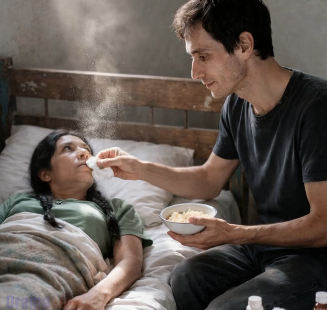
My name is Daniel Harper, and when people look at me now, they usually see what the years have done first.
I’m thirty-four, thin to the point of looking fragile, with permanent shadows beneath my eyes that no amount of sleep seems to erase. My shoulders curve forward, as if I’ve learned—instinctively—to make myself smaller. It’s not illness. It’s exhaustion. The kind that seeps into your bones when you’ve carried another person’s life on your back for too long.
Once, my life was ordinary. And happy.
My wife, Laura Harper, and I lived in a small rented house on the outskirts of Santa Rosa, California, not far from vineyards and quiet back roads. In the mornings, the air smelled like eucalyptus and toast. We were elementary school teachers at the same district—never rich, never ambitious in a loud way, but content.
We believed in routines. Shared dinners. Evening walks. Reading side by side on the couch, legs tangled, comfortable in silence.
We believed love was something you protected.
Everything ended one December afternoon.
Laura had gone to the farmer’s market to buy ingredients for our holiday dinner. I was still at school when the call came. I remember the principal speaking, but I don’t remember his words. Only the way the classroom spun when I heard Laura’s name.
A delivery truck had lost control at an intersection slick from rain.
When I reached the hospital, she was already unconscious.
Machines beeped. Doctors spoke in careful tones. The diagnosis landed like a verdict: a severe spinal injury. Partial paralysis. Uncertain recovery.
When Laura woke, she screamed.
Not from pain—from fear.
The woman who used to dance barefoot in the kitchen, who sang off-key to embarrass our students during music class, stared at her legs like they belonged to someone else.
“I can’t feel them,” she whispered.
I took her hand and promised her something I never imagined would define my life.
“I’m here. I’m not going anywhere.”
From that moment on, my world shrank to the size of a bedroom.
I took an indefinite leave from teaching. Our savings evaporated quickly, swallowed by medical bills and equipment. The living room became a storage space for wheelchairs, braces, and physical therapy tools. The house smelled constantly of antiseptic and reheated food.
I learned how to lift her without hurting her. How to bathe her. How to change sheets without jostling her spine. How to hide my own panic when she cried at night, staring at the ceiling, whispering apologies for “ruining everything.”
Family suggested professional care.
I always answered the same way.
“She’s my wife. I’ll take care of her.”
To survive, I worked whatever jobs I could—electrical repairs, maintenance work, anything that paid cash. I came home exhausted, hands cracked and burned, but every night I sat beside her bed and read aloud.
Old novels. Articles. Sometimes I just talked—to fill the silence.
Laura rarely spoke.
She nodded. She cried quietly. She stared out the window for hours.
I told myself it was depression. Trauma. Grief.
I never doubted her.
Years passed.
Friends stopped calling. Invitations faded. My world narrowed until it was just Laura, work, and the quiet ache of repetition. People told me—some gently, some cruelly—that I was wasting my life.
I ignored them.
Love, I believed, meant staying.
Then came the afternoon that ended everything.
I had just left the house for a repair job when I realized I’d forgotten my wallet—ID, cash, everything. Annoyed, I turned back, thinking I’d be gone no more than a minute.
I unlocked the door.
Sunlight flooded the bedroom.
And my lungs stopped working.
Laura wasn’t in bed.
She was standing.
Standing—unsupported, balanced, steady—pulling sweaters from the closet. Her posture was strong. Confident. Alive in a way I hadn’t seen in five years.
Beside her stood a man I had never seen before. Tall. Well-dressed. Calmly folding clothes and stuffing them into a large suitcase on our bed.
They were laughing.
Not politely. Not carefully.
Real laughter.
“Hurry,” Laura said in a clear, steady voice. “Before he comes back. And don’t forget the envelope from the wardrobe. That’s where he keeps the cash.”
They both turned.
Laura’s face drained of color.
The man froze.
For a moment, no one spoke.
Five years of sacrifice, sleepless nights, and quiet loyalty crashed into me all at once. My chest tightened so violently I thought I might collapse.
“You… can walk,” I said hoarsely.
Laura opened her mouth. Closed it. Then sighed.
“Yes,” she said. “I can.”
“Since when?”
Her eyes hardened. Not with guilt—with irritation.
“About three years,” she said flatly.
Three years.
Three years of lifting her. Bathing her. Giving up my career. My life.
“Why?” I whispered.
She looked at the man beside her, then back at me.
“Because I didn’t want to go back to that life,” she said. “Teaching. Struggling. Being… ordinary. When I met Mark at therapy, he showed me another option.”
Mark shifted uncomfortably.
“She was afraid you’d leave if you knew,” Laura continued. “So it was easier to let you keep caring for me. You’re good at it.”
Good at it.
That was all I was.
I didn’t shout. I didn’t cry.
I simply stepped aside.
“Take what you want,” I said quietly. “And go.”
They left within ten minutes.
The house felt enormous afterward. Empty. Echoing.
I sat on the edge of the bed and stared at my hands—the same hands that had fed her, cleaned her, held her through nightmares.
I didn’t feel rage.
I felt relief.
The next weeks were brutal. I returned to teaching. Started therapy. Sold what little I had to rebuild. The truth spread quickly—Laura had left town with Mark, chasing a life that didn’t include me.
And then, slowly, something unexpected happened.
I slept.
I laughed.
I remembered who I was before love turned into sacrifice without honesty.
Last year, I ran into a former colleague at a bookstore. We talked. We smiled. It felt easy.
For the first time in years, I didn’t feel responsible for someone else’s lies.
I still believe in love.
But now I know this:
Devotion without truth isn’t love.
It’s a prison.
And walking away—even broken—is sometimes the bravest thing you can do.