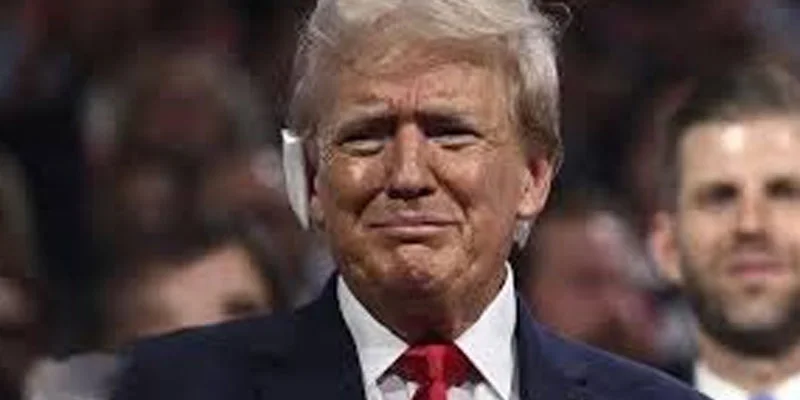
The room fell silent the moment his voice cracked. Even his fiercest critics weren’t prepared for what they were witnessing. Donald Trump, eyes glistening, paused mid-sentence as the crowd held its breath. What he revealed next shattered weeks of speculation, leaving millions stunned—arguing, grieving, and wondering what could possibly come next.
For many watching, the sight of Trump fighting back tears felt almost surreal. A man long defined by defiance and unwavering confidence suddenly appeared vulnerable, his usual forceful delivery replaced by hesitation and a trembling voice. Regardless of how his words may be interpreted in the long run, the raw emotion of that moment cut through politics and touched something deeply human.
Almost instantly, reactions began to ripple across a divided audience. Some viewed his vulnerability as a sign of strength—a rare glimpse behind a persona that had dominated headlines for years. Others found it difficult to reconcile this emotional display with the image they had long opposed. The moment didn’t settle debates; instead, it deepened them, adding an emotional layer to arguments that were once purely ideological.
In the hours that followed, the nation seemed to divide along a new emotional line. Supporters spoke of renewed loyalty and resilience, while critics acknowledged the weight of what had been shared. As the crowd finally exhaled, his closing call for strength lingered—leaving behind a haunting realization: whatever comes next, nothing will feel quite the same again.