Most of us use everyday tools on autopilot. We brush our teeth, turn door handles, open jars, clip our nails — all without thinking twice. These objects are so familiar that we rarely question how they work or why they’re shaped the way they are.
Take the humble nail clipper.
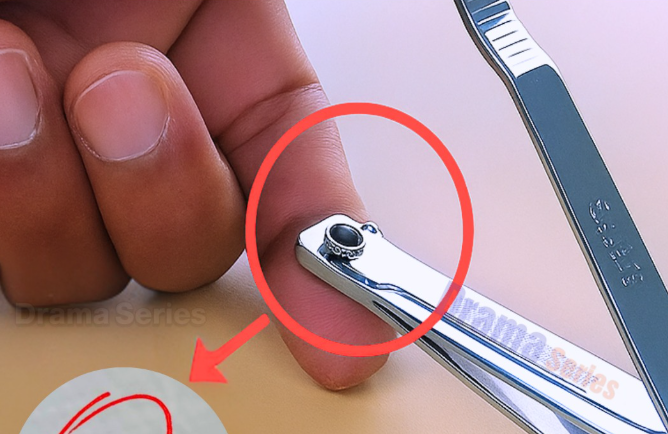
It’s small, inexpensive, and found in almost every household. You might keep one in your bathroom drawer, your purse, or your travel bag. You’ve probably used it thousands of times. Yet very few people stop to notice one tiny detail: the small round hole at the end of the clipper’s handle.
At first glance, it looks insignificant. Almost decorative. But that little hole is a quiet example of thoughtful engineering — and a reminder that good design often hides in plain sight.
A Simple Tool With a Smart Mechanism
That small round hole is not an accident. It plays a central role in how the nail clipper functions.
When you flip the metal lever over and insert it into the hole, it becomes the pivot point — the hinge that allows the lever to multiply force. With a gentle press of your thumb, the blades close evenly and cleanly, cutting through a hard nail with minimal effort.
This is leverage at work, a basic mechanical principle that turns a small amount of pressure into a powerful action. Because of this design, the clipper does not rely on strength alone. It relies on geometry and balance.
For someone with strong hands, this may go unnoticed. But for older adults, or anyone living with arthritis, joint stiffness, nerve pain, or reduced grip strength, this detail makes all the difference. The tool works with the body, not against it.
Good design doesn’t demand more effort from the user. It quietly reduces it.
When Design Protects Dignity
As we age, everyday tasks can become more challenging. Something as routine as trimming nails may require more concentration, steadiness, or strength than it once did.
What often goes unspoken is how deeply this affects independence and self-esteem.
Struggling with small tasks can feel frustrating, even embarrassing. It’s not about vanity or pride — it’s about autonomy. Being able to care for yourself, in your own time, without pain or assistance, matters.
That’s why thoughtful design is not a luxury. It’s a form of respect.
The nail clipper’s pivot hole, its curved lever, its spring tension — all of these details were created to reduce strain, improve control, and prevent injury. They protect fingers, joints, and confidence in equal measure.
A Tool That Thinks About Safety Too
The hole at the end of the handle also serves practical purposes beyond cutting nails.
Thread a string or key ring through it, and suddenly the clipper is easier to grip, easier to hang, and harder to lose. This small option is especially useful for people who struggle with bending, searching through drawers, or handling tiny objects.
Even the way the lever folds back into the hole to lock the clipper closed is intentional. It keeps sharp edges covered, reducing the risk of accidental cuts when reaching into a bag or drawer.
Once again, this is design thinking ahead — anticipating mistakes, slips, or limitations before they happen.
Why We Don’t Notice Good Design
The irony of good design is that it often goes unnoticed.
When something works well, we rarely think about it. We only notice design when it fails — when a lid won’t open, a handle hurts to grip, or a button is hard to press.
But the best-designed objects fade into the background. They feel natural. Intuitive. Effortless.
The nail clipper is a perfect example. Its design has remained largely unchanged for decades, not because of laziness, but because it works. Every curve and component serves a purpose refined over time.
In many ways, it represents the highest compliment a tool can receive: invisibility.
Aging Changes How We See Everyday ObjectsWhen we’re younger, speed and convenience dominate our priorities. We want things fast, sleek, and efficient.
As we grow older, comfort, safety, and ease take center stage. We begin to appreciate objects that don’t rush us, strain us, or demand precision we may no longer have.
That shift in perspective teaches us something valuable: progress isn’t always about making things more complex. Sometimes it’s about making them gentler.
The tiny hole on a nail clipper becomes a symbol of that philosophy. It’s not flashy. It doesn’t announce itself. But it quietly adapts to human needs across a lifetime.
A Lesson Hidden in Everyday Tools
There’s a broader lesson here.
Our homes are full of objects like this — tools designed with care, empathy, and foresight. Jar openers, ergonomic scissors, curved handles, textured grips — each one reflects an understanding that human bodies change, and tools should change with them.
When we notice these details, we begin to approach aging differently. Not as a loss of ability, but as a shift toward smarter solutions.
Aging gracefully isn’t about doing everything the same way forever. It’s about using the right tools, embracing thoughtful design, and allowing small innovations to preserve comfort and independence.The Quiet Brilliance of Small Things
So the next time you pick up a nail clipper, pause for just a moment. Look at that tiny round hole.
It’s not just metal. It’s leverage, safety, foresight, and respect — all compressed into a detail small enough to overlook.
In a world that celebrates big ideas and bold inventions, it’s worth remembering that some of the most meaningful improvements to daily life come from the smallest, quietest designs.
And sometimes, the simplest tools teach us the most enduring lessons: that comfort matters, dignity matters, and thoughtful design can make everyday life a little easier — at any age.